

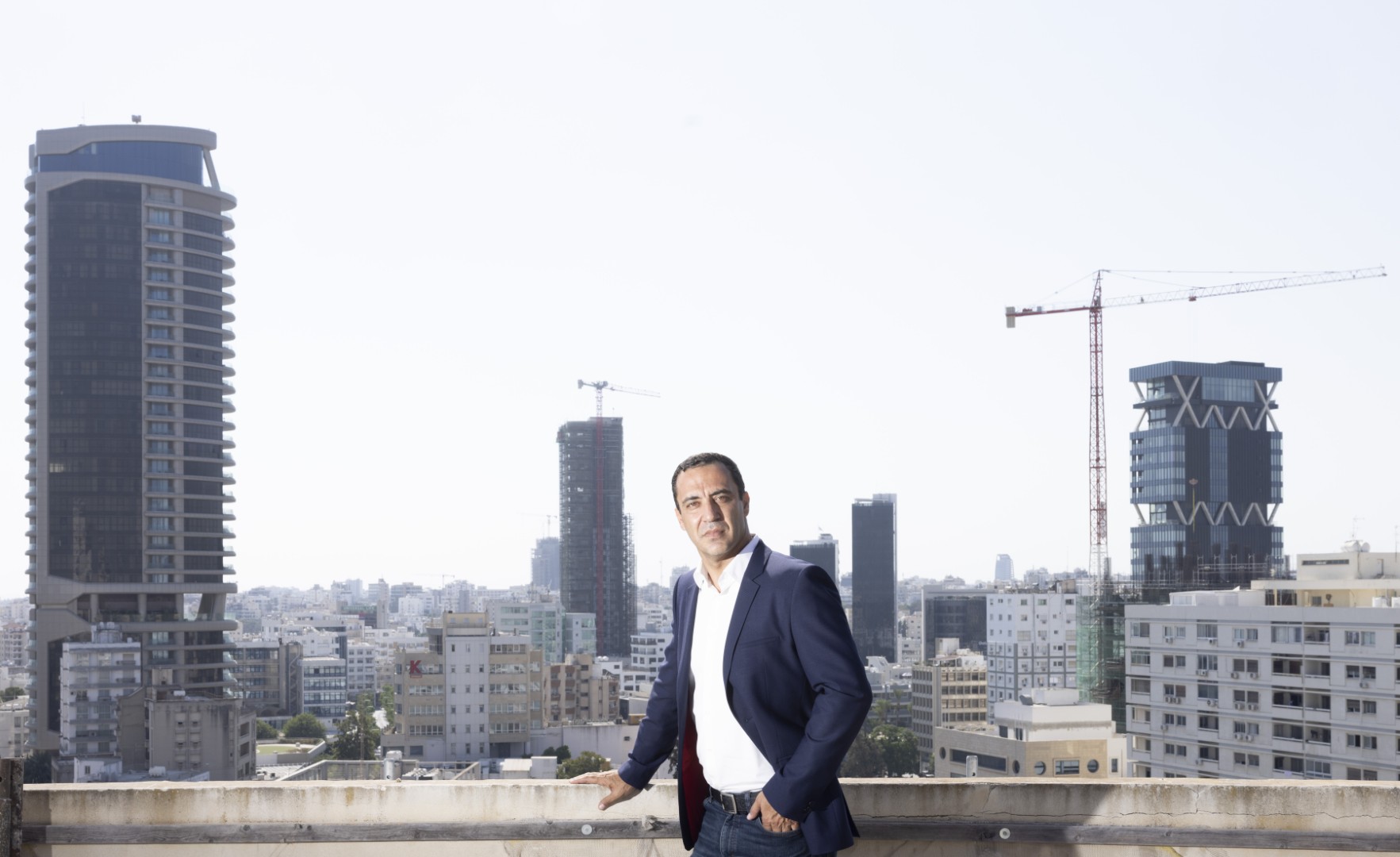
The property valuer and development consultant tells PropertyMatters why a viable investment does not in itself guarantee affordable housing. He discusses land costs, financing, the needs of Limassol and Nicosia, and the changes he proposes.
Interview with PropertyMatters
More property sales do not necessarily mean more people can buy a home. That is the measure by which Polys Kourousides proposes judging the Cyprus property market, shifting the discussion from transaction records to housing costs and what households can actually afford.
In his interview with PropertyMatters, the valuer and development consultant uses specific illustrative examples to explain why build-to-rent can work for investors without automatically being affordable for tenants. For a flat with an investment cost of €220,000, he calculates a required monthly rent of about €1,146, based on the assumptions about returns and expenses he sets out in his answer.
From land and permitting delays to long-term financing and the reuse of vacant buildings, he describes the changes he considers necessary. He also distinguishes the needs of each city and explains why a first-home purchase should start with the household budget rather than the maximum loan a bank will approve.
Behind the sales records
In your recent writing, you raised the possibility that sale contracts in 2026 might surpass the record set in 2007. Beyond transaction volume, what indicators show whether healthy demand is driving today’s growth? Where do you see the most significant differences and risks compared with that period?
The Cyprus property market is going through a particularly active period, and the possibility that 2026 could approach or surpass the 2007 transaction record deserves attention. But the number of sale contracts is insufficient to assess the health of the market. We need to examine the relationship between prices and incomes, credit growth, the sources of demand, investment returns and households’ ability to buy a home.
Compared with 2007, we now operate under a stricter banking and supervisory framework, while international demand and equity capital play an important role. The risk remains that prices could become detached from Cypriots’ purchasing power. The real success of the property market is measured both by how many properties are sold and by how many people can buy a home.
The housing the market is missing
In Nicosia and Limassol, Cyprus’s two largest cities, which housing needs are going most unmet today, and who is affected? What types of homes, in which areas and at what range of prices or rents, would meet the means of workers and families in each city?
The greatest unmet need concerns middle-income households, young couples and workers who do not qualify for social housing but struggle to afford market prices. In Limassol, international demand and high land costs add to the problem. There is a need for practical one- and two-bedroom flats in areas with access to jobs, schools and transport.
In Nicosia there are more opportunities, including in Lakatamia, Dali and Geri, and through the regeneration of existing areas. As affordability targets, I would suggest purchase prices of around €160,000–€220,000 and rents of €650–€900, depending on the city and the property. These are desirable levels rather than representative current market prices. Limassol in particular needs action on land costs and housing production.
The cost of a housing development
You have experience in valuations and feasibility studies for large projects. For a housing development aimed at middle-income households, what figures determine whether it can proceed? Using an illustrative example, how much do land, construction, financing and delays affect the final price?
A development’s viability is determined mainly by land, construction, financing and time. Consider an illustrative development of 10 flats costing €2 million in total: €450,000 for land, €1,200,000 for construction, €125,000 for studies, permits and professional fees, and €225,000 for financing and other expenses.
| Cost category | Amount | Share |
|---|---|---|
| Land purchase | €450,000 | 22.5% |
| Construction cost | €1,200,000 | 60% |
| Studies, permits and professional fees | €125,000 | 6.25% |
| Financing and other expenses | €225,000 | 11.25% |
| Total | €2,000,000 | 100% |
Breakdown of total cost
- Land 22.5%
- Construction 60%
- Studies 6.25%
- Other costs 11.25%
The average cost comes to €200,000 per flat before developer profit and VAT on sales. With an assumed profit of 15% on cost, the required average sale price reaches €230,000, plus any applicable VAT. If a delay pushes total costs up by 5%, that adds €100,000, or €10,000 per flat before profit.
Affordable housing is primarily a question of production costs. Lowering land costs, speeding up permitting and using planning incentives can make a substantial difference to the final price.
“Affordable housing is first and foremost a question of how much it costs to build.”
Financing a sale and financing a rental
What mix of equity, bank borrowing and pre-sales could support a housing development in Cyprus today at a manageable level of risk? How does financing change when homes are held for long-term rent instead of being sold, and is there room for institutional investors in that model?
A housing development needs a balance of equity, bank borrowing and pre-sales. As an illustration, 25%–35% equity can be combined with borrowing and proceeds from pre-sales, depending on the bank’s terms and how far the project has progressed. Pre-sales reduce commercial risk.
In long-term rental, by contrast, capital is recovered gradually through the rent. That requires long-term financing, more patient capital and close attention to net returns. There is room for institutional investors if a stable framework is put in place. Making state land available on long leases can lower initial costs and make projects with affordable rents viable.
Build-to-rent and the limits of affordability
Could build-to-rent, the organised development of homes for long-term rental under professional management, succeed in Cyprus, and particularly in Limassol? In an illustrative project, what rent would be needed to earn an adequate net return after maintenance, management and vacancies, and would a middle-income household be able to afford it?
Build-to-rent can succeed, particularly in Limassol, as long as we distinguish investment viability from affordability for tenants. For a flat with a total investment cost of €220,000, a target net annual yield of 5% and an assumption that operating costs, management and vacancies absorb 20% of gross rent, the required monthly rent is about €1,146. The calculation is illustrative and excludes taxes and financing costs.
A middle-income household would struggle to afford that rent. Initial costs therefore need to come down through the use of state land, suitable planning incentives and long-term capital. The aim is to add rental homes that workers can actually afford.
Incentives that deliver measurable housing benefits
Alongside build-to-rent as a business model, there is a government incentive scheme of the same name. How do you assess its design? What commitments are needed on the level and duration of affordable rents so that incentives deliver a lasting housing benefit as supply grows?
The principle of using incentives to increase supply is sound. What matters, though, is the public return: when the state grants extra development rights, it must secure a measurable and lasting benefit for citizens.
I would support longer commitments to affordable rents, for example 10–15 years, with clear rules for rent adjustments and monitoring. Affordability should reflect disposable income as well as any percentage discount from market rents. Approvals, completed homes and the people who actually receive them should also be made public. The scheme’s effectiveness is measured by the affordable homes it delivers rather than the incentives it announces.
More homes within two to three years
You have argued that a greater supply of homes is part of the answer to the housing problem. In Cyprus, which intervention could add the most affordable homes over the next two to three years: new developments, the use of vacant buildings or conversion of other uses into housing? What is the main obstacle, and who should tackle it?
Over two to three years, new construction alone will be insufficient. The quickest approach combines bringing vacant buildings into use, converting suitable commercial space into homes and speeding up housing projects that are ready to proceed. Changes of use should go through simpler procedures while maintaining safety and quality.
State and municipal land can also be used through public-private partnerships. The main obstacle is the complexity and length of procedures. The central government, District Local Government Organisations and local authorities should take responsibility for specific targets and timetables. Plans need to say how many homes will be delivered and when. A responsible body is needed to organise and oversee the process.
Denser cities, better infrastructure
What needs to change in Cyprus’s planning and infrastructure so it can house more people without adding to the pressures they face in daily life? Where would higher residential density make sense, and how should the cost of necessary infrastructure be shared among the state, local government and developers?
We should move towards more compact cities, with higher residential density where adequate infrastructure exists or can be developed. Selected areas near universities, workplaces, main routes and public transport can accommodate additional development.
Higher density must go hand in hand with roads, sewer networks, schools, green space and public transport. The state and local government should fund basic public infrastructure, while developers should contribute proportionately when they benefit from additional rights. Part of the increase in land value from higher development allowances could be directed towards infrastructure and affordable housing. We need more development and better-planned cities.
“We need to build more, and we need better-planned cities.”
Four cities, different needs
What different needs do you see today in Limassol, Larnaca, Paphos and Nicosia, and how should those differences shape new development? With your experience of mixed-use projects, where would you choose housing, where commercial space, and where a combination that meets real demand?
Each city has a different economic and demographic base. In Limassol, strong international business activity supports offices and housing, but creates a particularly acute need for flats workers can afford. In Nicosia, services, the public sector and universities create opportunities for mixed-use development and purpose-built student housing.
In Larnaca, I see prospects for housing, with care to ensure that rising demand does not erode affordability. In Paphos, international and tourism demand supports holiday homes, but there needs to be enough supply for the permanent population. The choice between housing, offices and mixed uses should be based on lasting local demand rather than passing trends.

The lesson of the crisis and the value of liquidity
You started your own firm in 2009 and know the market as a valuer, a property development consultant and an investor. What lesson from that period most influences your decisions today? Can you give an example in which your assessment of risk led you to change a project’s design or decide against proceeding?
I started my own firm in 2009, when the property market had already begun feeling the effects of the global financial crisis. The most important lesson is that an investment cannot rely solely on an expectation of rising prices. It must be able to withstand less favourable scenarios too.
In feasibility studies we consider lower sale prices, higher construction costs, higher interest rates and longer times for units to be taken up by the market. Liquidity is as important as the value of the asset. In many cases, the sounder approach is to adjust the mix of uses, the size of the units or the schedule. It would be wrong to attribute a particular decision to a specific project here without presenting verified evidence. Sometimes the right investment decision is to walk away.
Buying a first home: the payment your budget can support
You have stressed the importance of timing a property purchase well. What financial checks should a young person make before deciding on a first home? When is buying viable, and when might renting or waiting be wiser, even if the mortgage is approved?
For a young person, the first question is what monthly payment they can keep up without compromising their quality of life. The loan amount the bank approves is secondary. As a general guide, total housing costs should be no more than about 30%–35% of net income, depending on other obligations.
A €200,000 loan over 25 years at an assumed interest rate of 4% has a monthly payment of about €1,056, excluding insurance and other costs. Buyers also need their own funds, an emergency reserve and a reliable income. If the payment puts too much pressure on the budget or the purchase uses up the savings, renting or waiting may be wiser. The best time to buy is when the buyer is financially ready, which does not necessarily coincide with a rising market.